
Taylor Devices’ facilities and capabilities have traditionally set the world standard.
Taylor Devices, Inc. is headquartered in North Tonawanda, NY and has been the leader in shock and vibration control for over 70 years. We specialize in the design and manufacture of motion control management systems for a myriad of industries, including Aerospace, Defense, Marine, Infrastructure, Nuclear, Space, Industrial, and more.
Our facilities are situated on two campuses – Buffalo Bolt Way and Tonawanda Island, which are vertically integrated from design to manufacturing to testing, allowing us to satisfy the most exacting customer requirements while providing the highest quality product. Our ability to maintain control from design conception through a product’s full life cycle ensures less dependency on third parties and thereby translating to safeguarded quality and shorter lead times.
While vertical integration is central to our business, we have also created a resilient supply chain network. A robust make vs. buy process systemically evaluates cost, capacity, lead time and risk to decide whether to produce parts in-house or source from qualified suppliers to improve efficiency and maximize customer value.






Western New York boasts a rich and influential history in the aerospace industry, dating back to the early 20th century. During this period, Buffalo, a thriving city in the United States, attracted numerous forward-thinking scientists and engineers who gathered to conceptualize and develop their innovative aircraft designs. These pioneers laid the groundwork for a robust aviation sector that continues to flourish in the region today.
North Tonawanda is located between the city of Buffalo and Niagara Falls. Founded in 1897, North Tonawanda is also known as “The Lumber City,” because of the significant lumber transportation industry in its past and was even once the largest port on the Great Lakes during the height of the Erie Canal. Today, the city offers plenty of water activities and a small but thriving downtown area full of shops and restaurants.
As the company grew, we opened our Buffalo Bolt Way Facility in 2014, allowing us to greatly expand our machining capabilities. The facilities are comprised of a machine shop, paint/finishing cells, and a development lab across three temperature-controlled buildings totaling 50,000 square feet in area on eight acres of land, giving us ample area to build if required.
Acting as our “internal supplier,” the machine shop at Buffalo Bolt Way can handle machining raw materials into components needed across all the structural, aerospace, and industrial product lines. While our machinists are fully qualified, they also have prompt support from our engineering team if needed. Lean manufacturing is implemented through our machine layout configuration allow for one-piece flow or cell-based production depending on demands. Some of our machine shop offerings include:
Along with this machine shop, Taylor Devices also has a network of outside suppliers that can rely on to meet demand surges.
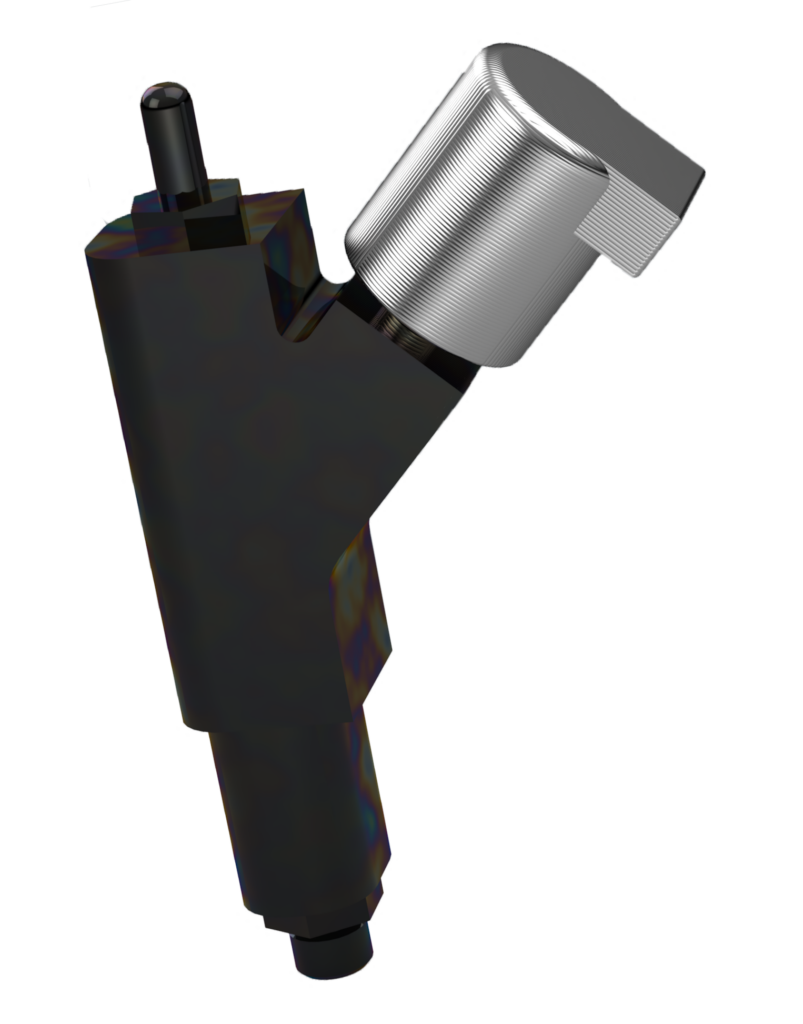
Taylor Devices has invested in a 2,500 sq ft manufacturing space to machine and build prototype devices separate from production hardware. This segregated workspace has dedicated engineering, expert machining support, and extremely capable CNC equipment and 3D printing machinery that allow for creating demanding components quickly. Having it separate from production allows flexibility to quickly design and build prototypes for customers, potential customers and internal research and development applications.
Our headquarters since 1960, the Tonawanda Island Facilities has expanded over the decades to the current campus totaling 65,000 square feet in area on seven acres of land. Having all departments under the same roof allows for quick communication and lean manufacturing.
Our assembly is divided into dedicated cells based on size and application of the product. Components are received from the Buffalo Bolt machine shop and external suppliers Just-in-Time (JIT), kitted, and delivered to the appropriate assembly cell. All areas are completely temperature-controlled and follow a one-piece flow. This is a strategy we implement whenever possible to increase efficiency and build quality into the process. We have also invested in automation allowing for increased safety, efficiency, employee safety, and accuracy.
After products are assembled, they are tested in our world class test facilities that have traditionally set the standard for component testing of dampers, shock absorbers and shock isolators. Our facilities are:
We maintain strict calibration practices of all our equipment that comply with the requirements of ANSI/NCSL Z540.3-06 and shall be traceable to the National Institute of Standards and Technology (NIST).
We welcome our customers to visit our headquarters in North Tonawanda, NY and take a tour of our world class testing facilities and to witness tests on their applicable products upon request. If customers are unable to come to our facilities, we can provide remote witnessing of tests through a system of cameras that can be viewed through a secure site. Three high-speed cameras are also maintained for visual documentation of dynamic tests.
From testing, products flow into our state-of-the-art painting and finishing area. We are a SSPC, AMPP accredited paint facility with three fully enclosed paint booths that handle most of our finishing, painting, and curing capabilities. Additionally paint capacity are located at the Buffalo Bolt facilities for more component level parts.
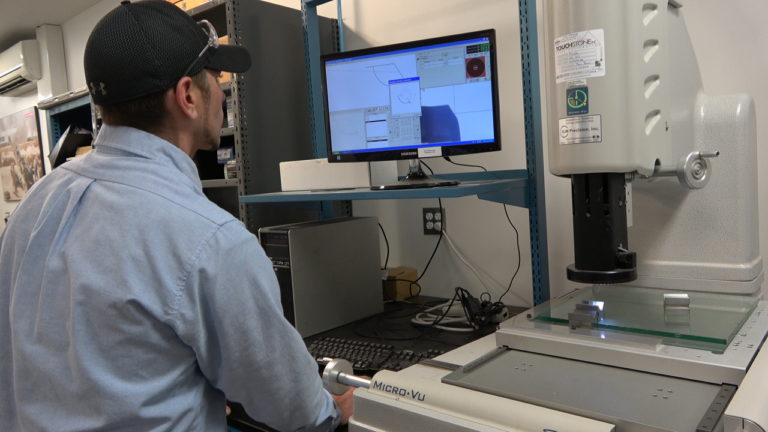
Quality is at the core of everything we do at Taylor Devices. We’ve invested in modern quality assurance labs across both our Buffalo Bolt and Tonawanda Island locations, equipping them with the latest measurement technology, including Coordinate Measuring Machines (CMMs) and Vision Systems. These systems are not only used for highly accurate measurements but are also designed to collect critical data. This data-driven approach allows for continuous process improvement and enhances our ability to detect and address potential issues proactively.
Our quality control strategy is segmented to ensure thoroughness at every stage:
We go beyond technology by investing in our people through a certified operator program, ensuring our technicians have the expertise to execute flawlessly. This is all reinforced by a regular audit process that holds us to the highest standard of excellence.
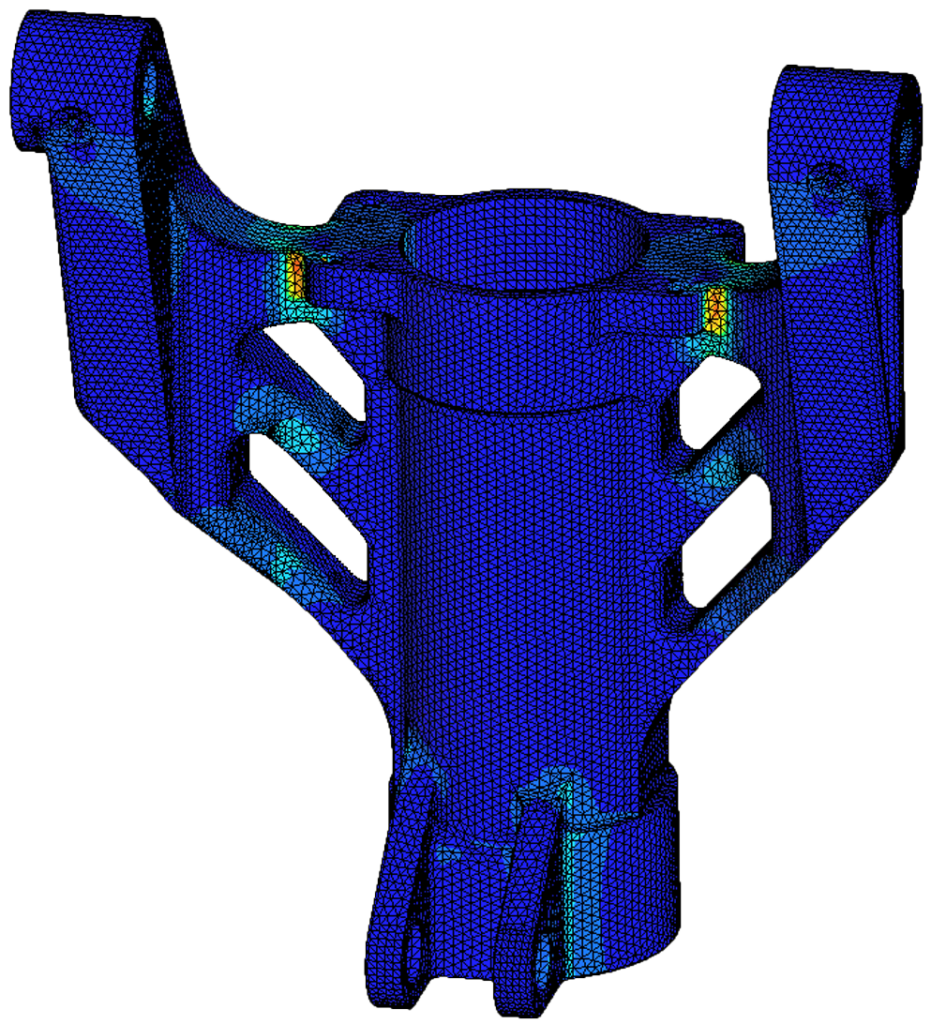
Along with our manufacturing facilities, we also have a fully staffed engineering team ready to provide full design and analysis. Whether it’s choosing dampers for a structural application and running an analysis or designing a custom shock or vibration system using our suite of products, our team has extensive experience in virtually all types of isolation elements.
Taylor Devices employs both internally developed, as well as commonly available commercial software tools to address customer needs depending on the complexity of the analysis including:
Having the engineering staff at the same facilities as our machine shop allows for quick communication if a machinist ever need assistance or have questions about a part they are working on. Taylor Devices Design Engineers utilize Design for Manufacturing practices and thorough design reviews are performed with Manufacturing Engineers.
If you have any questions about our products capabilities, please do not hesitate to reach out by phone or email. We would love to have a quick chat about what shock or vibration problems you are facing and collaborate to develop a solution to meet your requirements.
Our corporate offices house most of our workforce, spanning engineering, quality assurance, program managers, sales, business development, purchasing staff, and other administrative workers. Their proximity to our production facilities enables enhanced collaboration and efficient communication across all operational teams.
We encourage all our customers to visit our facilities for tours and for witness testing. We have dedicated spaces for customers to work while they are here along with three conference rooms for larger meetings.
Headquartered in North Tonawanda, NY, Taylor Devices is spread out over two campuses encompassing 115,000 sq-ft that include the offices, machine shop, paint shop, and packaging.
Personnel and air cargo access is available through the Buffalo-Niagara International Airport, Buffalo, New York which is a twenty minute drive from North Tonawanda. Private aircraft access is provided by both the Buffalo-Niagara International Airport and also the Niagara Falls International Airport in Niagara Falls, which is fifteen minutes from North Tonawanda.
Located at 90 Taylor Drive, North Tonawanda, this site includes corporate and engineering operations, product assembly and testing facilities, research and development, bonded storage and repair activities, and a portion of the company’s production machining operations. The Tonawanda Island facilities include multiple buildings totaling 65,000 square feet in area on seven acres of land. Tonawanda Island is located 500 feet from the mainland on the Niagara River and is accessible via a two-lane highway bridge.
Located at One Buffalo Bolt Way, North Tonawanda, this site opened in 2013 and currently includes three buildings totaling 50,000 square feet in area on eight acres of land. The Buffalo Bolt Way buildings include production machining, finishing, and packaging operations. Driving distance between the Tonawanda Island and Buffalo Bolt Way facilities is 1.7 miles.
The Small Parts Production Center consists of equipment configured to produce all Taylor products smaller than two inches in diameter. The equipment consists of medium volume, high precision CNC turning centers, CNC milling centers, automated gundrilling machines and low production manual support machines.
The Large Parts Production Center consists of equipment configured to produce all Taylor products over two inches in diameter. The equipment consists of medium volume, high precision CNC turning centers, CNC milling centers, custom built boring and deep hole drilling machines and limited production manual support machines.
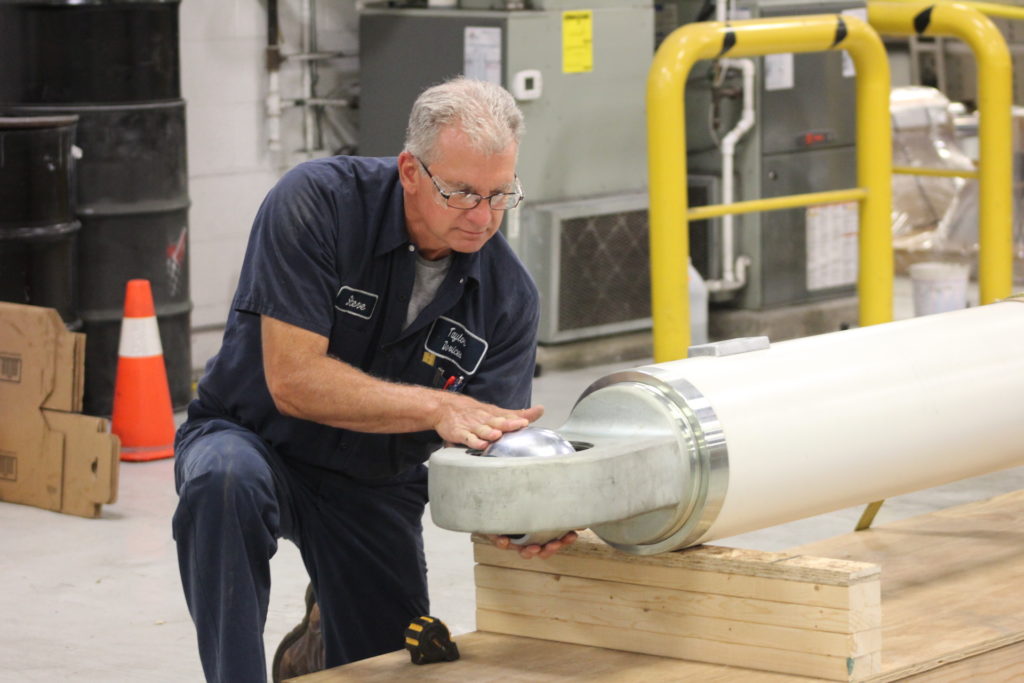
Taylor Devices’ facilities have traditionally set the world standard for testing of shock absorbers, fluid viscous dampers and shock isolation systems. The company maintains the following facilities, which are also available for the use of our customers on a contractual basis:
A multi-disciplinary professional staff is maintained at the facility, including mechanical, civil, electrical, industrial, and manufacturing engineers. At present, some 90 U.S. patents have been attributed to this staff in the fields of shock isolation, vibration control, suspension design, and other related energy absorption subjects. Technical reports by the staff have been published by the SAE, AISE, ASCE, NCEER, Applied Technology Council, Journal of Shock and Vibration, National Science Foundation, Shock and Vibration Symposium, United States Air Force, United States Navy, and the United States Marine Corps, in addition to numerous other technical publications and magazines.
Taylor Devices provides our customers state of the art analytical capability for shock and vibration simulation. The engineering staff has performed systems definition and analysis for all branches of the Department of Defense, as well as numerous industrial customers. Our exclusive Shock Data Base of Transient Pulses includes test records of most major shock events of the past 120 years. This includes seismic effects of major earthquakes, vehicle crash histories, conventional and special weapons detonation, underwater shock, U.S. Navy shock test machine simulation, spacecraft launch transients, transport and handling shock, and generic transient shock wave forms for equipment design. Taylor Devices employs both internally developed, as well as commonly available commercial software tools to address customer needs depending on the complexity of the analysis. All known shock inputs can be accommodated, including weapons transients with their associated fast rise times. Taylor Devices also has the ability to address virtually all types of isolation elements, including those with high degrees of non-linearity.
Computer Aided Design (CAD) capability is provided by SolidWorks® 3D CAD software and AutoCAD.
As a defense contractor, Taylor Devices actively participates in funded government directed research, in addition to the company’s internal R&D program. Research projects are structured within three areas: basic research, applied research, and product development. The scope of the company’s research activity includes passive and active structural control, natural and man-made environmental effects, fluid chemistry, interdisciplinary interfaces, seal development, structural dynamics, and vehicle control and handling.
Taylor Devices is constantly refining and improving its shock isolator designs and is tremendously proud of the performance of the company’s products in both military and commercial service.